If your lot in Western Pennsylvania is not on public sewer, the house needs a septic system, and the install is one of the more involved pieces of excavation on a residential project. Whether you are building new or your existing system has failed and needs to be replaced, it helps to know how the process works.
Valley Brook Services handles septic system installation and full replacements in our Pennsylvania service area. We do install and replacement work only, and the design and permit come first.
The Permit and Design Come First
In Pennsylvania, a septic system is designed for the specific property and permitted through a local Sewage Enforcement Officer (SEO) before it is installed. Soil testing on the lot drives what type of system the property can have and where it can go. We install to the permitted design and to county code, so the first step is making sure you have, or are getting, that approved design.
If you do not know where you are in that process, tell us. Some customers come to us with a permit in hand, and some are still working out what the property needs.
Excavation and Setting the Tank
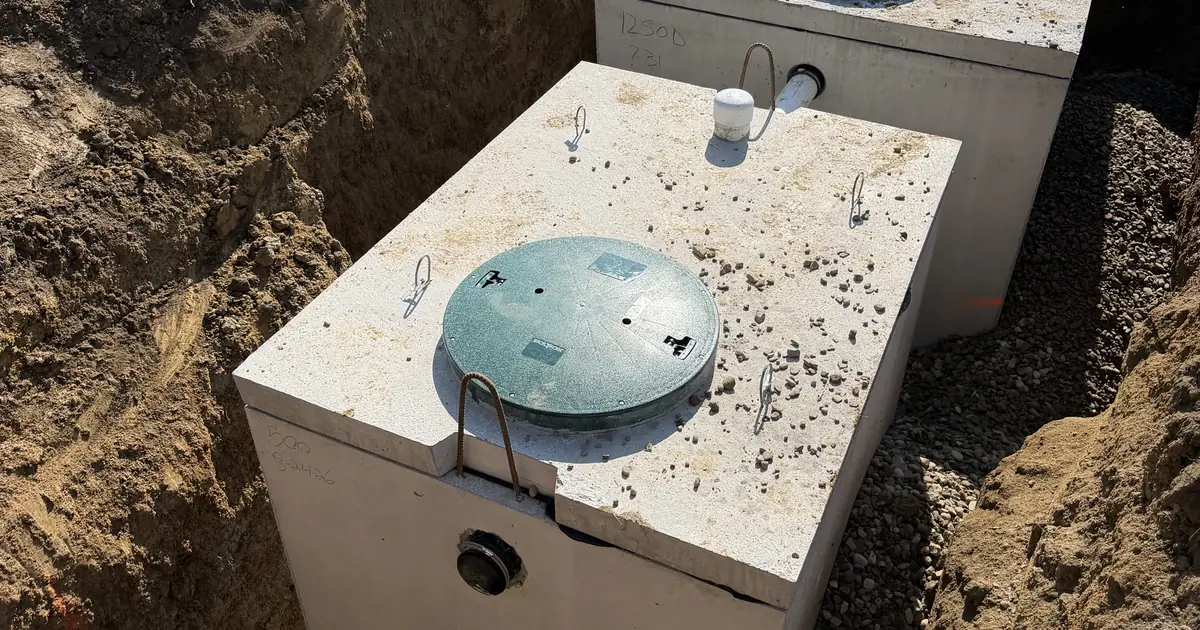
Once the design is approved, the excavator opens the area for the tank to the depth and location shown on the plan. The bottom needs to be prepared so the tank sits level and stable. A concrete tank is heavy, so it is set carefully by machine, and the inlet and outlet pipes are lined up with the house line and the next part of the system.
Risers are brought up from the tank so the lids end up at or near the finished grade, which makes the tank accessible later without digging. If you have seen green lids in a yard, those are risers.
Distribution and the Drain Field
From the tank, the wastewater goes to a distribution box and then out to the drain field, where it is spread and treated by the soil. Depending on what the design calls for, that can be a stone bed with distribution pipes or another approved layout. The pipe must be set to the right slope and the stone laid correctly, because that is how the system works for years.
Inspection Before Backfill
The permitted system is typically inspected before it is covered. That means the open excavation, tank and piping stay uncovered until the inspector has seen them. We schedule the work with that in mind, since backfilling too early can mean digging it back up.
Finishing the Site
After the inspection, the system is backfilled and the area is graded so water moves away from it. Keeping heavy vehicles and equipment off the drain field afterward matters, so it is worth telling everyone on the property where the system sits.
Weather and Timing
Wet dirt cannot be moved well and frozen ground has limits, so septic installs depend on conditions. We will tell you plainly what the weather means for your schedule instead of promising something the ground will not allow.
What We Do and Do Not Do
We install new septic systems and replace failed ones in Pennsylvania. We are not a pumping or repair company. If you need your tank pumped or a small repair made, a local septic service is the right call. If the system needs to be fully replaced, that is where we come in.
Building a new home? The same crew can handle your site prep, utilities and foundation too. See the counties we serve, or contact us about your project.