If you are building a new home in Western Pennsylvania, the foundation dig is the first big physical step of the whole project, and it sets the pace for everything after it. Footers, walls, framing and utilities all wait on it. Knowing how the work goes helps homeowners and builders keep the schedule honest.
This is a plain walk-through of what happens when a foundation is excavated, what we need from you before we arrive, and what can slow things down.
Before the Machines Show Up
A clean foundation dig starts with information, not equipment. Before we dig, it helps to have:
- Staked corners and elevations. The surveyor or builder marks where the building goes and how deep the footers need to be. We dig to those marks.
- A clear path in. Trucks, stone and excavators need a stable way onto the lot. If the entrance turns to mud, everything gets harder.
- A place for the dirt. Excavated soil that will be reused for backfill needs to be stored where it will not be in the way, and where water will not run through it.
- Utilities located. Call 811 before any digging so buried lines are marked. It is a free call, and it is the law to make it first.
The Dig
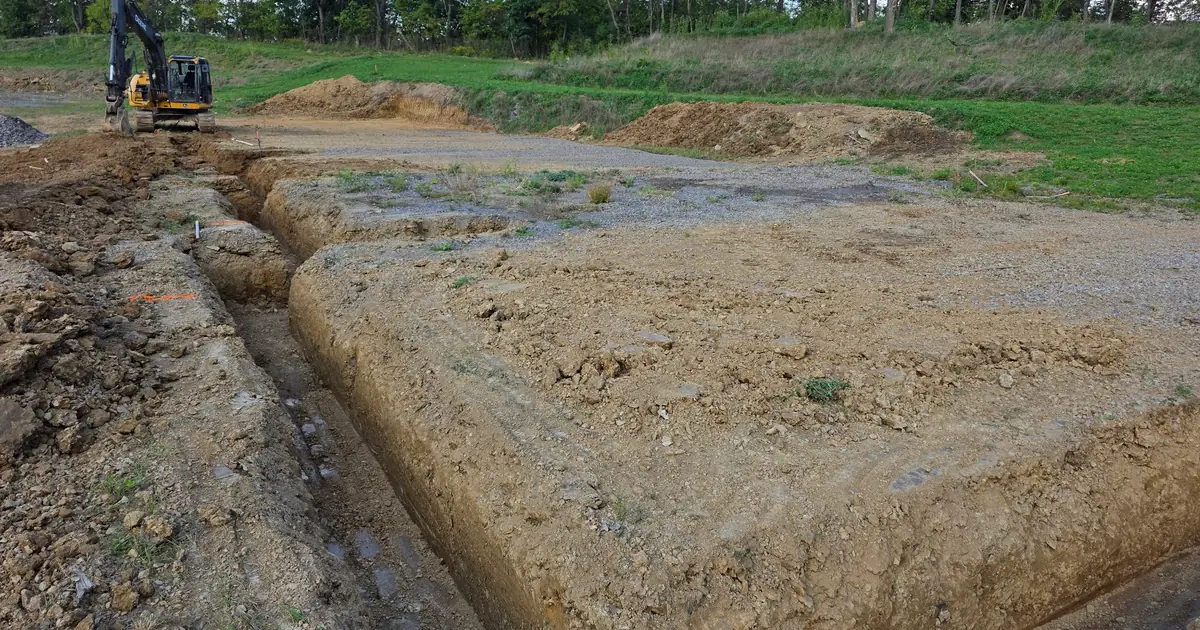
The excavator opens the basement or crawlspace area and cuts the footer trenches to the depth called for on the plans. The sides need to be cut cleanly and the bottom left firm and level, because the footers sit directly on that ground. Soil that is soft, wet or disturbed at the bottom of a footer trench is a problem the builder and inspector will want to look at before concrete is placed.
Our crews dig a lot of foundations for area home builders, so the rhythm of staking, digging and handing the hole off to the footer crew is something we work around every week.
Footers, Walls and the Hand-Off
Once the excavation is ready, the footer crew sets forms and rebar and pours the footers. After the footers cure, the walls go up. We are usually off the lot during that stretch, then back when it is time to backfill. Leaving the right amount of room around the walls when we dig matters here, because the wall crew needs space to work.
Backfill
Backfill comes after the foundation walls are in place and the builder is ready. The soil goes back around the walls in stages and is compacted as it goes, with stone used where the plans call for it. Backfilling too early, or against walls that are not ready, can cause real damage, so this step follows the builder's schedule and not ours.
What Can Slow a Foundation Dig Down
- Wet ground. Soaked dirt cannot be moved well, and trying to work it makes a bigger mess. We will tell you plainly when conditions are not right.
- Frozen ground. Winter has limits. How much we can do depends on how hard the ground freezes that week.
- Rock. Western Pennsylvania can turn up shale and rock that was not obvious from the surface.
- Water in the hole. A wet spring or a high water table can mean pumping or extra drainage work before footers go in.
- Unclear staking. If we are not sure where a corner or an elevation is, we stop and ask. That is cheaper than digging in the wrong place.
Getting Your Foundation Dug
If you are lining up a foundation excavation for a new home, tell us about the project. We also handle site preparation, grading and underground utilities, so one company can take the lot from raw ground to ready for the builder. We work across Western Pennsylvania and Northeast Ohio.